The Vanishing Bees 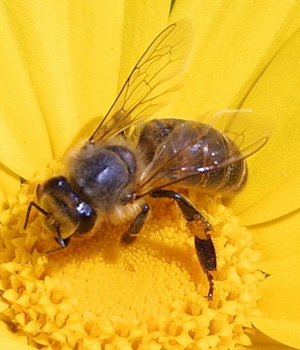
For those of you too young to remember your
grandmother using the term “the bee's knees”, it apparently started
during the flapper days of the 1920s, used to describe something or
someone who was of a very desireable quality. What better group to apply this
term to than the bees themselves.
You may not
realize this, but we owe our very survival to these tiny, tireless,
efficiently designed, fuzzy, buzzing, flying creatures called bees. Such a simple name for such an incrediblly important creature. Without bees
to pollinate our crops, we wouldn't have any fruits, vegetables and nuts
to eat. We likely wouldn't even have any beef to eat because bees also
pollinate the alfalfa that cows consume. Without bees there would likely be no more milk nor juicy hamburgers.
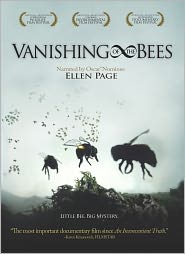
I recently watched a documentary titled
"Silence of the Bees" about the vanishing bees. I immediately
decided to write about it because it's a huge problem with possibly even
more dire consequences for us humans than global warming.
Everyone
needs to be aware of the situation because it threatens to affect every
one of us, but I hear very little about it in the mainstream press. Rather than sitting around assuming someone else is fixing the
problem, we as individuals need to do whatever we can right now. There are things that each of us can do to help prevent things from
getting worse. More about that later.
Like many people, I was vaguely familiar
with this vanishing bee phenomenon, but I didn't know a lot of details.
It seems this problem has been brewing for a long time. Most of the
blame can be pointed directly at us. Over the past several decades, in
our seemingly unquenchable thirst for more housing developments, golf
courses, resorts and commercial developments, we have slowly bulldozed
the natural habitat of bees and other vital creatures. What was once
abundant natural fields and forests filled with wildflowers and other
blooming plants and trees, now is covered over with homes, concrete
parking lots, warehouses, shopping malls, highways and other man made
intrusions on nature.
Joni
Mitchell sure knew what she was singing about in 1970 when she wrote the lyrics “They paved
paradise and put up a parking lot.”
She went on to tell the farmer to put away his DDT and give her spots on
her apples, but leave the birds and the bees, please. It's almost as if
she was psychic because now 40 years later her premonition is
coming true. .....we never know what we've got until it's gone.
If you want to read the lyrics intact simply Google the words “pave over
paradise”.
As our constantly growing population
demands ever increasing quantities of food, mega farms are taking over
large tracts of land devoted to growing this food for us to consume. The problem is, there were not enough native bees left in their now
severely diminished natural habitat who could pollinate these vast
fields of fruits and vegetables. This started a new trend of large
bee keeping companies bringing in their truckloads of bee hives that
they “rent” to the growers during pollinating season. The same truck
load of bees might be pollinating oranges in Florida one month and then
they are trucked to another far away state for apples, blueberries or
whatever else needs pollinating. This alone seems it would take a toll
on the bees' health.
Bees pollinate at least one third of
our food supply. Without pollination there will be no seeds.
Without seeds for reproduction, most plants will cease to exist. This includes basic plants like lettuce, herbs, spices, fruits,
vegetables, nuts, and so on. Granted, some plants reproduce by division
and some are pollinated by other flying insects such as butterflies and
moths, but these insects are also endangered because their natural
habitat has also been greatly diminished by our “progress”. Wildlife
also depends on these seeds, so they too will be endangered. Food prices
will soar and in the end, what we will have left is wheat, rice and
other grains that are pollinated by the wind. Life might be a bit
boring with only gruel, rice and cereal to eat for our entire life. We would eventually have no trees to climb or to shade us in the summer
and no forests to wander through except those with trees that reproduce
by runners. There will be no apples to give to the teacher on the first day of school,
but maybe kids don't do that any longer.
Plants, trees and rain forests in
particular are like the lungs of the earth. They help purify the air we
breathe. Combine the loss of much of our food producing plant
material with our current global warming trend and earth will become an
extremely inhospitable place to live. We all must make drastic changes
now before it's too late to reverse.
There is hope. We can do this.
Because of the serious nature of this problem that affects every person
on earth, science is keeping a closer watch on bees now. They have
discovered that the honey bees have not just one thing afflicting them,
but many. They are extremely stressed out. The one thing that seems to
have pushed them over the edge is a virus similar to HIV where it
diminishes their immune system. Somehow it has been spread around the
world, presumably because of the bee renting system that I mentioned above.
The rental bees were also vanishing in large numbers, so new bees were
brought in from other countries. Now the problem is worldwide.
Science is now working to cross breed our
docile bees with the africanized bees we've heard so much about in
recent years. The africanized bees are very aggressive, but they are
also much healthier and resistant to many of the problems of other bees.
Science is working to develop a new and improved bee that will have the
best characteristics of both types, but this will take time.
Meanwhile, there are things we can all do
now to prevent the situation from getting worse.
-
We must all plant more flowers
instead of vast perfectly manicured lawns that offer nothing to
wildlife, especially bees. Each
of us can create our own natural habitat that offers food for bees,
butterflies and other insects and wildlife. It can be by letting your
entire property go natural with native plants and wildflowers, or by
planting more flower beds using many re-seeding annuals and
wildflowers, or simply by adding little patches of nature here and
there. Like I said, mowed lawns may be aesthetically pleasing to us,
but they do nothing to help support nature. This was their habitat for
eons before we came along and changed it, so we must now learn how to
share it with them.
-
We
Americans have gotten to be very spoiled when it comes to buying
produce. We refuse to buy any fruits or vegetables that have even the
slightest blemish. Because of this, the growers are forced
by market trends, that we set, to use ever increasing amounts of
insecticides, instead of letting Mother Nature do her thing naturally. This trend must change. We need
to do whatever it takes to dramatically reduce or eliminate the use of
insecticides. Insecticides not only kill their intended victims, but
also nearly everything else in the area, including the bees that our
survival depends on. We are eating fruits and vegetables that have
been sprayed with insecticides so I'm sure our bodies are also
affected. I don't know about you, but I'd much rather eat an apple
with a small blemish that I can cut out, rather than an one that was sprayed
with insecticides.
-
We
must stop using insecticides on our own personal lawns and gardens.
Insecticides not only kill many beneficial insects, but they also make
their way into our water system as they run off into our rivers and
streams and they percolate down into our wells and aquifers. We are poisoning ourselves and everything around us and we seem to
be completely oblivious to it as
long as we have a perfect lawn to look at, perfect roses to enjoy and
perfect fruits and vegetables to eat.
-
We must educate ourselves, our
friends, relatives and neighbors about this serious problem. Urge people to stop using pesticides, including those used by lawn
care workers. Urge them to plant more flowers and create more
vegetable and fruit gardens. Urge them to reduce the size of lawns
that require polluting equipment to maintain. Urge your local
governments to promote the use of wildflowers along roads and highways
instead of mowing them. They can turn a boring highway into a
breathtakingly beautiful experience, while reducing pollution and
maintenance costs.
-
The earliest evidence of harvesting honey from bees
goes back to 20,000 BC. For those of us who are very adventurous, we can learn about bee keeping, also known as apiculture.
We can adopt an age old system of providing honey for ourselves
and nectar for the bees, by combining working bee hives with nearby
wildflowers and blooming food crops. This system worked
for a long time and it can work for us again.